
Rakesh K.
Solution Architect, 12+ Years



Build the Go backend companies hire for.
Forget toy APIs. Build a production-grade Go backend and learn the engineering behind it: layers, concurrency, auth, jobs and graceful shutdown.
- Real architecture
- 40+ hours hands-on
- Production-grade code
Built with tools used in industry
- Go
- PostgreSQL
- Redis
- Docker
- Cloudflare R2
- Caddy
Increase your chance to
get hired as Backend Engineer.
You know the basics. You’ve built APIs. Now learn the engineering skills companies actually look for in Backend Engineers.


Where most developers are
Where you’ll be
NowYou can build APIs, but you’re unsure how to structure a larger Go project.
AfterYou can organize a Go service into clear layers and explain why they exist.
NowYou know goroutines and channels, but concurrency decisions often feel like guesswork.
AfterYou can decide where concurrency helps, where it doesn’t, and how to control it safely.
NowYour database code works, but you don’t think much about transactions, indexes, or connection pools.
AfterYou can make deliberate database decisions based on the workload and access patterns.
NowYou can run the application locally, but deployment usually involves following a tutorial.
AfterYou can build, configure, deploy, and run the service yourself.
NowError handling, logging, configuration, and graceful shutdown are things you add later.
AfterThese become part of how you design the service from the beginning.
NowYou can implement individual features, but connecting everything into one maintainable system is harder.
AfterYou can take a backend from requirements → design → implementation → deployment.
NowAI writes the code in seconds, but you can’t tell when it has over-engineered it - or skipped the thing that mattered.
AfterYou have the system thinking to judge what AI hands you: what to keep, what to cut, and what it got wrong.
Writing APIs is easy. Building backend systems companies can trust is the real skill.
See what you’ll buildOne Go binary.
Production-grade from day one.
Rate limiting, auth, a typed API and background jobs - backed by Postgres, Redis and R2.


Go monolith · single binary
One system,
built in order.
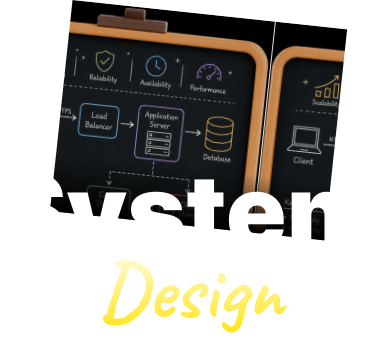
Every module ends with something running. The pieces you just saw in the diagram come online one at a time, and the app is in production from module four.
- modules
- 16
- lessons
- 79
- hours
- 40+
- app in production
- 1
01OverviewCourse overviewYou builda demo of the finished app4 lessons
What you’ll learnSee the app you will build, how its parts fit together, and where to get help during the course.
- Project demo
- Private Discord server*
+ 2 more lessons in this module
02DesignRequirements and database designYou buildthe requirements, a high-level design and the database schema3 lessons
What you’ll learnTurn a product brief into functional and non-functional requirements, draw the high-level design, and design the database schema.
- Prerequisitesarticle
- Requirements and high-level design
- Database design
03HTTPHTTP server from scratchYou builda Go HTTP server that reads its config from the environment4 lessons
What you’ll learnSet up the project, write an HTTP server with the standard library (no framework), and manage configuration.
- Project setup
- HTTP server from scratch
- Config management
+ 1 more lessons in this module
04DeployFirst deploymentYou buildthe service running on a public URL3 lessons
What you’ll learnDeploy the service to Render early, follow a deployment checklist, and learn the handler pattern used for the rest of the API.
- Deploying to Render
- Deployment checklist and starter kitarticle
- The handler pattern
05PostgresPostgreSQL and migrationsYou builda PostgreSQL database with migrations and a configured connection pool3 lessons
What you’ll learnSet up PostgreSQL, manage schema changes with migrations, and configure the connection pool.
- Setting up PostgreSQL
- Manage Database Migrations
- Implement Database Migrations
06APIList and delete endpointsYou buildlist and delete endpoints that stop when the client cancels3 lessons
What you’ll learnBuild the listing and delete endpoints, and pass context through so a query stops when the client cancels the request.
- The listing endpoint
- The delete endpoint
- Context and the zombie query
07LoggingLogging and error handlingYou buildstructured logs with a request ID on every line3 lessons
What you’ll learnAdd structured logging, trace a request through every layer with a request ID, and handle errors consistently.
- Structured logging
- Request correlation
- Error handling
08ValidationValidation and DTOsYou builda create endpoint that validates its input3 lessons
What you’ll learnBuild the create endpoint, validate input in one place, and use DTOs to keep API data separate from internal models.
- The create endpoint
- Validation
- DTOs
09TestingAI-assisted API testingYou buildan automated test pass across your API2 lessons
What you’ll learnUse TestSprite, an AI testing agent, to test your running API and find edge cases you missed.
- TestSprite integration
+ 1 more lessons in this module
10AuthAuthentication and authorizationYou buildsignup, signin and protected routes with ownership checks4 lessons
What you’ll learnImplement signup and signin, protect routes, and check ownership so users can only change their own data.
- Signup
- Signin
- Protected routes
- Delete authorization
11R2 + workerFile uploads and background jobsYou buildimage uploads to Cloudflare R2, a job queue, a worker pool and a CDN22 lessons
What you’ll learnUpload files straight to R2 with presigned URLs, queue processing jobs in PostgreSQL, run them in a goroutine worker pool, handle failures with dead-letter jobs, and serve results through a CDN.
- End-to-end flow - sequence diagram
- Setting up object storage
- The presign endpoint
- Planning the uploads worker
- Worker setup with goroutines
- Claiming jobs with production-grade SQL
- Normalizing raw images in a Go worker
- Errors and dead-letter jobs
- CDN deep dive for production systems
- Cloudflare R2 CDN setup
- R2 lifecycle rules
+ 11 more lessons in this module
12Rate limiterRate limiting and graceful shutdownYou builda rate limiter and a graceful shutdown for the server, workers and database8 lessons
What you’ll learnWrite token-bucket rate-limiting middleware, test it and fix its data races, then shut down the server, workers and database without losing in-flight work.
- Rate limiting middleware
- Testing the rate limiter
- Fixing data races in the limiter
- Periodic token bucket cleanup
- Graceful shutdown deep dive
- Graceful shutdown for workers and the database
+ 2 more lessons in this module
13QueriesPagination, filtering and indexesYou buildpaginated, filtered listings backed by indexes7 lessons
What you’ll learnImplement pagination and handle its edge cases, parse and validate filter parameters, and add indexes based on the query plan.
- Pagination deep dive
- Implementing pagination
- Pagination edge cases
- Database indexing and query performance
- Parsing and validating filter parameters
+ 2 more lessons in this module
14APIUpdate endpoint and assignmentsYou buildan update endpoint, plus two features you build on your own4 lessons
What you’ll learnBuild the update endpoint, then complete two assignments on your own: user contact info and category CRUD.
- The listing update endpoint
- User contact infoassignment
- Category CRUDassignment
+ 1 more lessons in this module
15CI/CDDocker and CI/CDYou builda Docker image that deploys on every push4 lessons
What you’ll learnContainerize the service with Docker, deploy it to a bare-metal server, and automate releases with GitHub Actions.
- Docker image and containerization
- Bare metal deployment
- CI/CD with GitHub Actions
+ 1 more lessons in this module
16FrontendFrontend integration and next stepsYou buildthe backend connected to a frontend2 lessons
What you’ll learnConnect the backend to a frontend and get a clear list of what to learn next.
- Frontend integration
+ 1 more lessons in this module
Shipped by people who were where you are.
Every name below links to a LinkedIn profile you can open. Read the quote, then go check the person.
- enrolled
- 1400+
With AI in the picture, anyone can put together a backend these days. But actually building something scalable and production ready, that’s a different skill altogether, and it usually comes from real world experience or from learning under someone who has that experience. That’s exactly what this Golang course gave me.
It didn’t just add to my technical knowledge, it changed the way I think about building backends. What it really takes to make a system safe, secure, and capable of handling scale. The industry best practices, what to use, what to avoid, everything is taught in a very structured and easy to follow way.
Read the full reviewShow less
One thing I’d add: if you’re curious enough to look up the concepts Rakesh Sir mentions in passing during the videos, your learning goes up a whole other level.
I’d genuinely recommend this course to anyone looking to level up their backend skills and actually build systems that are production ready.
A big thank you to Rakesh Sir for this course. What I learned here, I was able to directly apply to my own projects and take them up a notch. Looking forward to the upcoming courses. The content is absolutely worth the price.
I came in with ~3 years of backend experience in Java and Spring Boot, so I wanted a Go course that went beyond syntax. CodersGyan delivered exactly that - clean explanations of concurrency, project structure, and idiomatic Go, all built around real projects instead of toy examples. The way complex topics are broken down makes them stick. If you’re a backend developer adding Go to your stack, this is worth your time.
Rakesh Sir has this way of explaining things that made me rethink stuff I thought I already understood. Even on topics I already knew, his explanation added a different perspective or took it a level deeper. What I love most about him is that he takes the time to explain complex topics patiently. No unnecessary complexity. No rushing through concepts. He is concerned that you really understand what is happening and why it is happening.
Thank you for putting so much effort into creating such valuable content.

I’m Rakesh. I build these systems for a living.
Solution Architect · 12+ years shipping backends
I have never learned anything from a video I only watched. So this course runs the other way round: you build the system first, hit the problems it creates, and the principle lands from the inside - where it stays.
That is the whole method. No toy examples, no concept you cannot immediately go and break.
See you in module 01.
One course. Two ways in.
Both plans are the same 16 modules, billed once. The difference is whether you build it alone or with me looking at your code.
Everything else
you were about to ask.
The things people write to me about before they buy, answered in the order they usually come up.
Still not sure whether this is for you?Ask me directly
How much Go do I need before I start?
Enough to have written a few small programs and read a package you did not write - structs, slices, goroutines. You do not need to have built anything production-grade; that is what the course is for. If you have never opened a Go file, spend a weekend on my free Go course on YouTube and come back.
Are the lessons live or recorded?
Recorded, so you build at your own pace and can stop mid-module for a week without falling behind. Elite adds the live part: a weekly group call on architecture and code review, plus 1:1 time with me.
How long does this take alongside a full-time job?
The lessons are 40+ hours, and the building takes longer than the watching. At five or six hours a week - one weekday evening and part of a Saturday - most people finish in three to four months.
Do I have to pay for Postgres, Redis and Cloudflare R2?
Not while you are building - everything runs locally. From module four the service is deployed for real, and the free tiers on all three cover what a course project does. The course also shows you what that bill looks like when it stops being a course project.
How do I ask questions when I get stuck?
Community access is Elite only. Elite gets you into the private community and the Elite Engineers Club, where you can post what you are stuck on, plus doubt solving with me directly and personal feedback on your assignments.
What happens when Standard's one year runs out?
You lose access to the course - the lessons stop playing. You keep your certificate and anything you downloaded. Elite has no expiry - including the modules added after you buy.
Can I start on Standard and move up to Elite later?
Yes. You pay the difference rather than the full Elite price, and everything you have already done carries over. To upgrade, reach out to [email protected].
Do you offer a student discount?
Yes, students get 15% off either plan. Email [email protected] with a valid copy of your university proof, or write to us from your university email address.
What does the seven-day refund actually require?
Nothing. Ask within seven days of buying and you get the full amount back - no form, no reason, no questions. Send an email to [email protected] and it is done.
Will this get me hired?
No course can promise that, and anyone promising it is selling you something else. What this one does is leave you able to explain why a service is laid out the way it is, defend a schema in a review, and point at something running in production that you built. That is what the interviews worth passing actually test.
The next thing you build
runs in production.
The design, the server, the database, the deploy, the background jobs - in order, on your own machine, by you. Start with module 01.

7 days, 100% refund. No questions asked.